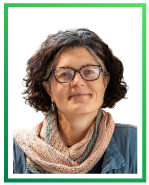
Andrea Weeks
Dr. Andrea Weeks is a botanist with over two decades of experience in plant systematics research, herbarium curation, and public outreach for biodiversity science. She holds a Ph.D. in Systematic Botany from the University of Texas at Austin and a B.S. in Plant Biology from Cornell University. Since 2005, she has served on the faculty at George Mason University in Virginia, where she is currently an Associate Professor in the Department of Biology and Director of the Ted R. Bradley Herbarium (GMUF/LFCC). She has authored over 60 peer-reviewed publications and led collaborative, grant-funded projects related to angiosperm systematics, floristics, herbarium digitization and conservation genetics. Mostly recently, she co-led an NSF conference award, «Supporting inclusive and sustainable research infrastructure for systematics (SISRIS) by connecting scientists and their specimens» that supported workshops and symposia at Botany 2023 and 2024. These events shared new practices that improve attribution of natural history specimens and highlighted research advances in systematics that can be made by leveraging people-data within biodiversity informatics databases. She currently serves on the boards of the Flora of Virginia Project and Virginia Botanical Associates, which manage Virginia’s digital flora and botanical atlas. She is president-elect of the American Society of Plant Taxonomists.
Abstract
Advancing conservation in the Anthropocene by linking collectors to their natural history specimens using Bionomia.
Using information about the people who created natural history specimens to improve the accuracy and precision of historical collections’ data is a time-honored practice among curators and research scientists. This practice is time-consuming to do, however, as biographical materials for collectors need to be accessed, field notebooks relocated and their contents interpreted along with the specimen records. If the identity of the collector is unclear or unknown, these potentially rich sources of additional information about when, where and why the specimen was created may remain out of reach. For species that are now rare, threatened or endangered, such sources of information tied to the collectors’ identity can provide important new insights on the ecology and behavior of past populations that can assist present day conservation efforts. In this presentation, I will describe a case study of using historical specimens and their collectors’ information to rediscover a plant species in the US state of Virginia. This experience inspired a series of Bionomia training workshops for the natural history collections’ community in 2023 and 2024, whose outcomes will also be discussed. Since 2018, the online tool, Bionomia (bionomia.net), has assisted users in disambiguating the names of collectors for specimen records that are served to GBIF and in downloading these identifiers for reintegration to collections’ databases. Adopting a standardized system of unique identifiers for people, such as that applied by Bionomia, is a critical step in achieving the vision set forth by the Extended Specimen Network and requires community-level collaboration.